jack lalanne power juicer user manual

Jack LaLanne Power Juicer User Manual: A Comprehensive Guide

Welcome! This manual delivers essential guidance for safely and effectively utilizing your Jack LaLanne Power Juicer, ensuring optimal health benefits and longevity.

Explore detailed instructions, safety precautions, and troubleshooting tips, mirroring resources like the Bosch VitaExtract and Omega juicer manuals, for a superior juicing experience.

Embrace a Healthier Lifestyle! The Jack LaLanne Power Juicer represents a legacy of fitness and well-being, championed by the iconic “Godfather of Fitness” himself. This juicer isn’t merely an appliance; it’s a gateway to unlocking the nutritional power of fresh fruits and vegetables, promoting vitality and a robust immune system.

Designed for simplicity and efficiency, the Power Juicer extracts maximum juice yield while preserving vital enzymes and nutrients often lost in centrifugal juicers. This manual serves as your comprehensive guide, mirroring the detailed instructions found in resources like the Bosch VitaExtract manual, to ensure you fully understand and benefit from your juicer’s capabilities. Whether you’re a seasoned juicing enthusiast or a beginner, this guide will empower you to create delicious and nutritious juices effortlessly. Prepare to embark on a journey towards optimal health!

Historical Context & Legacy of Jack LaLanne

A Pioneer of Modern Fitness. Jack LaLanne (1914-2011) was a visionary who revolutionized the fitness industry long before it became mainstream. He championed exercise and healthy eating decades ago, hosting the first televised exercise show and opening one of the first modern health clubs. His unwavering commitment to wellness inspired generations to prioritize their physical and mental health.

LaLanne believed in the power of whole foods, particularly fresh juices, to nourish the body. The Jack LaLanne Power Juicer embodies his philosophy, offering a simple yet effective way to incorporate nutrient-rich juices into a daily routine. This juicer isn’t just a product; it’s a continuation of his legacy, a tool designed to empower individuals to take control of their health, much like the guidance found in manuals for brands like Kuvings and Kenwood.

Key Features and Benefits

Optimal Nutrient Extraction. The Jack LaLanne Power Juicer excels at extracting maximum nutrients from fruits and vegetables, thanks to its slow masticating (or auger) system. This process minimizes oxidation, preserving vital enzymes and vitamins often lost in centrifugal juicers. Enjoy vibrant, flavorful juices packed with goodness!

Versatility & Ease of Use. Beyond juice, this model handles leafy greens, wheatgrass, and even makes nut butters and baby food. Its simple design, similar in user-friendliness to a Bosch VitaExtract, ensures easy operation and cleanup. The juicer’s robust construction guarantees durability, offering years of reliable performance. Experience the convenience and health benefits of a truly versatile kitchen appliance, mirroring the comprehensive guides found for Omega juicers.

Juicer Components & Identification

Essential Parts Overview. Your Jack LaLanne Power Juicer consists of several key components working in harmony. These include the Motor Base, providing the power for operation; the Juicing Screen & Blade Assembly, responsible for pulp separation and juice extraction; and the Pulp Ejector & Collection Container, efficiently removing waste.

Detailed Component Breakdown. Familiarize yourself with each part for proper assembly and maintenance. The control panel on the motor base dictates operation. The juicing screen, often requiring periodic inspection, works with the blade to maximize yield. The pulp container’s capacity is crucial for extended juicing sessions. Understanding these components, as detailed in manuals like those for Kenwood juicers, ensures optimal performance and longevity of your appliance;

Pulp Ejector & Collection Container

Efficient Waste Management. The Pulp Ejector and Collection Container are vital for a clean juicing experience. This system automatically separates pulp from the juice, depositing it into the attached container. Regular emptying is crucial, preventing blockages and maintaining optimal performance, similar to systems found in Bosch VitaExtract models.

Proper Usage & Capacity. Ensure the container is securely attached to the juicer body. Monitor the pulp level during operation; overfilling can hinder performance. The container’s capacity allows for extended juicing without frequent interruptions. Cleaning this component thoroughly after each use prevents buildup and ensures hygienic operation, as emphasized in various juicer manuals, including those for Omega juicers.

Juicing Screen & Blade Assembly

Core of the Juicing Process. The Juicing Screen and Blade Assembly is the heart of your Jack LaLanne Power Juicer, responsible for extracting juice from fruits and vegetables. This assembly features a fine mesh screen that filters pulp, delivering a smooth, nutrient-rich juice. The sharp blades efficiently break down produce for maximum yield, comparable to the effectiveness of Kuvings juicer components.

Maintenance & Inspection. Regularly inspect the screen for any cracks or damage. Ensure the blades are sharp and free of obstructions. Proper cleaning after each use is essential to prevent clogging and maintain optimal performance. Refer to safety guidelines, similar to those in Kenwood juicer manuals, when handling the blades to avoid injury.

Motor Base & Control Panel

Power and Operation. The Motor Base houses the powerful motor driving the juicing process. It’s designed for stability during operation. The Control Panel typically features a simple on/off switch, and potentially reverse functionality to clear blockages – a feature found in many modern juicers, like the Bosch VitaExtract.

Safety & Electrical Considerations. Always ensure the motor base is dry before operation. Never immerse it in water. The power cord should be inspected regularly for damage. Refer to the safety precautions section for detailed electrical safety guidelines, mirroring those found in Omega juicer manuals. Proper grounding is crucial for safe operation, preventing potential hazards.

Assembly Instructions

Getting Started. Before your first juice, proper assembly is crucial for safe and efficient operation. Begin by ensuring all components are clean and dry. Refer to the ‘Juicer Components & Identification’ section to familiarize yourself with each part. This process mirrors the detailed assembly guidance found in manuals for juicers like the Bosch VitaExtract and Kenwood models.

Secure Connections. Carefully align and connect each component, ensuring a snug fit; Incorrect assembly can lead to malfunctions or safety hazards. Double-check all connections before powering on the juicer. The following sections detail specific steps for attaching the screen, securing the pulp ejector, and connecting the motor base for optimal performance.

Attaching the Juicing Screen & Blade

Critical Step. Carefully position the juicing screen onto the auger shaft, ensuring the alignment pins are correctly seated. A secure fit is vital for efficient juice extraction and preventing component separation during operation. Next, firmly attach the blade assembly onto the screen, applying gentle but consistent pressure.

Secure Locking. Rotate the blade assembly clockwise until it locks into place – you should hear or feel a distinct click. Avoid excessive force, which could damage the components. Refer to diagrams in this manual, similar to those found in Omega juicer guides, for visual assistance. Improper attachment can result in reduced juice yield and potential safety risks.

Securing the Pulp Ejector & Container

Proper Alignment is Key. Position the pulp ejector firmly onto the juicer body, aligning the designated slots. Ensure a snug fit to prevent pulp from escaping during the juicing process. Next, carefully place the pulp collection container directly beneath the ejector chute.

Twist-Lock Mechanism. Most models utilize a twist-lock mechanism; rotate the container clockwise until it securely locks into position. Verify the lock is engaged to avoid spills. Similar to Bosch VitaExtract designs, a secure connection is paramount. Regularly inspect the container for cracks or damage. A stable setup minimizes mess and maximizes convenience during operation, contributing to a cleaner juicing experience.

Connecting the Motor Base

Stable Foundation. Place the motor base on a flat, stable surface, ensuring adequate ventilation around the unit. This prevents overheating during operation. Carefully align the assembled juicing unit – screen, blade, and pulp ejection system – with the motor base’s receiving port.

Secure Attachment. Gently lower the juicing unit onto the motor base, often utilizing a twist-and-lock mechanism similar to other juicers like those from Kenwood. Rotate clockwise until a distinct click confirms a secure connection. Do not force it! Improper connection can damage internal components. Before plugging in, double-check the alignment. A firm connection is vital for safe and efficient juicing, mirroring safety standards found in Omega juicer manuals.

Operating Instructions

Preparation is Key. Before beginning, ensure the juicer is correctly assembled and the motor base is securely connected. Wash all produce thoroughly. Cut fruits and vegetables into appropriately sized pieces to fit the feed chute – typically 1-2 inches. Remove large pits and hard rinds.

Gentle Pressure. Turn the juicer on. Slowly and gently feed the prepared produce into the feed chute using the pusher. Avoid excessive force, which could strain the motor or damage the juicing screen. Maintain a consistent feeding pace for optimal juice extraction. Observe the pulp ejection and juice collection; adjust feeding speed as needed. Remember, consistent operation, like with a Bosch VitaExtract, yields the best results.

Preparing Fruits & Vegetables

Optimal Prep for Maximum Yield. Thoroughly wash all fruits and vegetables under cool, running water to remove dirt and residue. Remove any stickers or labels; For harder produce like carrots or beets, consider peeling to improve juice quality and prevent strain on the motor.

Size Matters. Cut produce into pieces that comfortably fit into the juicer’s feed chute – generally 1 to 2 inches in diameter. Larger pieces may require more force and could overload the system. Remove large seeds and pits (like those from peaches or plums) to avoid damage to the blade assembly. Leafy greens can be fed in larger handfuls. Proper preparation, similar to guidelines for a Kuvings juicer, ensures efficient operation.

Juicing Process – Step-by-Step

Effortless Juice Extraction. Ensure the juicer is properly assembled and the pulp container is securely attached. Turn the juicer on using the power switch. Gently feed prepared fruits and vegetables into the feed chute, using the pusher if needed – never use your fingers!

Maintain Consistent Pressure. Apply gentle, consistent pressure to the pusher to encourage juice extraction. Avoid forcing produce down the chute, as this can strain the motor. Observe the juice and pulp collection; adjust produce size if necessary. As with a Kenwood juicer, monitor for smooth operation. Once finished, turn off the juicer and allow it to come to a complete stop before disassembly.

Adjusting Pulp Ejection Settings

Customize Your Juice. The Jack LaLanne Power Juicer features adjustable pulp ejection settings, allowing you to control the amount of pulp in your juice. Locate the pulp ejection control, typically a dial or slider on the juicer’s body.

Fine-Tune for Preference. Rotating or sliding the control towards a higher setting results in wetter pulp and more fiber in your juice, similar to options found in a Bosch VitaExtract; A lower setting yields drier pulp and clearer juice. Experiment with different settings to achieve your desired consistency. Remember, wetter pulp retains more nutrients! Regularly check the pulp container during operation and adjust as needed for optimal results.

Cleaning & Maintenance

Preserve Performance. Regular cleaning and maintenance are crucial for ensuring the longevity and optimal performance of your Jack LaLanne Power Juicer. Always disconnect the juicer from the power source before disassembly. Thoroughly rinse all removable parts – including the juicing screen, blade assembly, pulp ejector, and collection container – with warm, soapy water immediately after each use.

Safe Practices. Avoid using abrasive cleaners or scouring pads, as these can damage the components. Refer to safety instructions, similar to those in an Omega juicer manual, for proper handling of the blade. Periodically inspect parts for wear and tear, replacing them as needed. Proper care guarantees years of healthy juicing!

Disassembly for Cleaning

Simple Steps. Begin by detaching the pulp ejector and collection container; these easily lift away from the main juicer body. Next, carefully remove the juicing screen and blade assembly – typically involving a counter-clockwise rotation to unlock. The motor base remains stationary during this process.

Component Separation. Ensure all parts are fully separated before washing. Refer to the diagrams within this manual for visual guidance, mirroring the clarity found in Bosch VitaExtract instructions. Avoid forcing any components; gentle pressure is sufficient. Proper disassembly facilitates a thorough cleaning, preventing residue buildup and maintaining hygienic operation. Remember safety first!

Washing Procedures & Safe Practices

Gentle Cleaning. Wash all detachable parts – pulp ejector, screen, blade assembly, and container – with warm, soapy water immediately after each use. Avoid abrasive cleaners or scouring pads, as these can damage the components. The blade assembly requires extra caution; handle it carefully to prevent cuts.

Safe Handling. Never immerse the motor base in water. Wipe it clean with a damp cloth only. Ensure all parts are completely dry before reassembling. Similar to Omega juicer cleaning guidelines, prioritize hygiene. Dishwasher use may be possible for certain parts – consult the full manual for specifics. Prioritize safety and longevity!

Preventative Maintenance Tips

Regular Inspection. Periodically inspect the juicing screen and blade assembly for any signs of wear and tear, such as cracks or dullness. Replace worn parts promptly to maintain optimal juicing performance and prevent motor strain. Like Bosch VitaExtract maintenance, consistent checks are key.

Proper Storage. When not in use, store the juicer in a clean, dry place. Avoid prolonged exposure to direct sunlight or extreme temperatures. Ensure all parts are thoroughly dry before storage to prevent mold or mildew growth. Following these simple steps will extend the life of your Jack LaLanne Power Juicer, ensuring years of healthy enjoyment!

Troubleshooting Common Issues

Juicer Won’t Start: First, verify the power cord is securely connected. Check your household circuit breaker or fuse box. If still unresponsive, the motor may require professional attention – do not attempt self-repair. Refer to warranty information.

Wet or Dry Pulp: Adjust the pulp ejection settings. For drier pulp, tighten the setting; for wetter pulp, loosen it. The consistency of fruits and vegetables also impacts results. Experiment with different produce types.

Excessive Noise: Ensure all parts are correctly assembled and securely locked into place. Excessive noise can indicate a loose component or internal motor issue. Discontinue use and investigate immediately, mirroring safety advice from Omega juicer manuals.

Juicer Not Turning On

Initial Checks: Before assuming a malfunction, confirm the power cord is firmly plugged into both the juicer and a functioning electrical outlet. Test the outlet with another appliance to rule out a power supply issue.

Safety Lock Engagement: The Jack LaLanne Power Juicer features a safety interlock system. Ensure all components – particularly the pulp container and juicing screen – are correctly and securely assembled; Misalignment prevents operation.

Motor Overload Protection: The juicer may have an internal overload protector. If triggered, unplug the unit and allow it to cool for 30 minutes before attempting to restart. If the problem persists, consult warranty details for service.

Pulp is Too Wet/Dry

Adjusting Pulp Ejection: The Jack LaLanne Power Juicer offers adjustable pulp ejection settings. For drier pulp (more juice extraction), tighten the pulp ejection adjustment knob. Loosen it for wetter pulp, if desired, or if the juicer is clogging.

Fruit/Vegetable Type: The moisture content of produce significantly impacts pulp consistency. Softer fruits like oranges yield wetter pulp than harder vegetables like carrots. This is normal.

Feed Rate & Pressure: Feeding produce too quickly or applying excessive pressure can overwhelm the juicer, resulting in wetter pulp. Feed at a moderate pace and avoid forcing ingredients. Ensure the tamper is used correctly to gently guide produce.

Excessive Noise During Operation

Proper Assembly: Ensure all components are securely and correctly assembled. A loose or misaligned part is a common cause of increased noise. Double-check the juicing screen, blade assembly, and pulp ejector are firmly in place.

Foreign Objects: The presence of hard objects (seeds, pits, small stones) can create significant noise and potentially damage the juicer. Always remove these before juicing. Inspect produce carefully.

Overload/Strain: Feeding too much produce at once or attempting to juice very hard items can strain the motor, leading to louder operation. Feed gradually and avoid overloading.

Motor Wear: Over extended use, normal motor wear can contribute to increased noise. If the noise persists after checking the above, contact customer support.

Safety Precautions

Read Carefully: Before operating the Jack LaLanne Power Juicer, thoroughly review this manual. Understanding proper usage is crucial for safe operation and preventing injury.

Electrical Safety: Never immerse the motor base in water or any other liquid. Always unplug the juicer before disassembly, cleaning, or when not in use. Inspect the power cord regularly for damage.

Blade Awareness: The juicing screen and blade assembly are extremely sharp. Handle with utmost care during assembly, disassembly, and cleaning. Avoid direct contact with the blades.

Proper Usage: Only juice fruits and vegetables intended for juicing. Never insert hands or foreign objects into the feed chute while the juicer is running. Supervise children closely.

Warranty Information

Limited Warranty: Your Jack LaLanne Power Juicer is covered by a [Specify Duration ─ e.g., one-year] limited warranty against defects in materials and workmanship from the date of original purchase. This warranty applies to normal household use only.

Coverage Details: The warranty covers repair or replacement of defective parts, at the manufacturer’s discretion. Damage resulting from misuse, abuse, accidents, unauthorized repairs, or improper cleaning is not covered.

Claim Process: To initiate a warranty claim, please contact our customer support team at [Provide Contact Information ⏤ e.g., phone number or email address]. Proof of purchase is required.

Exclusions: This warranty does not cover normal wear and tear, or any consequential damages. See full warranty details included with your product for complete terms and conditions.

Frequently Asked Questions (FAQ)

Q: Can I juice leafy greens? A: Yes, the Power Juicer excels at extracting juice from spinach, kale, and other leafy greens. Ensure they are properly fed into the chute for optimal results.

Q: What if the juicer clogs? A: Disconnect the power. Reverse the direction using the pulse function, or disassemble and clear any obstructions. Refer to the cleaning section for detailed instructions.

Q: Is the juicer dishwasher safe? A: While some parts are dishwasher safe, hand washing is recommended to prolong their lifespan. Check the ‘Cleaning & Maintenance’ section for specifics.

Q: How often should I replace the screen? A: Replace the juicing screen every [Specify Timeframe ─ e.g., 6-12 months] depending on usage, or when you notice reduced juicing efficiency.


sibley guide to trees

David Allen Sibley’s comprehensive guide revolutionized tree identification, offering detailed illustrations and accessible keys for North American species․

Published in 2002, and updated since, it’s a vital resource for both amateur naturalists and professionals seeking accurate botanical knowledge․

Overview of David Allen Sibley’s Work

David Allen Sibley is renowned for his meticulous field guides, beginning with birds and expanding to trees․ His work emphasizes visual identification, combining detailed paintings with accessible descriptions․

The Sibley Guide to Trees, published in 2009, reflects his dedication to accuracy and clarity, building upon earlier botanical studies․ Sibley’s approach integrates artistic skill with scientific rigor, making complex information understandable for a broad audience․

Significance of Tree Identification Guides

Tree identification guides are crucial for ecological studies, forest health monitoring, and appreciating the natural world․ Accurate identification supports conservation efforts and understanding biodiversity․

Guides like Sibley’s facilitate citizen science, enabling broader participation in data collection․ They also hold historical and cultural importance, connecting people to the trees around them, and their economic value․

Key Features of the Sibley Guide to Trees

The Sibley Guide excels with its comprehensive coverage, detailed paintings, and user-friendly keys, making North American tree identification remarkably accessible to all skill levels․

Comprehensive Coverage of North American Trees

Sibley’s Guide distinguishes itself by encompassing a vast array of North American tree species, going beyond common varieties to include less familiar and regionally specific trees․ This extensive coverage ensures a higher probability of identifying almost any tree encountered across the continent․

The guide doesn’t limit itself to widespread species, offering detailed information on trees found in diverse habitats, from forests to wetlands, making it a truly comprehensive resource․

Detailed Illustrations and Paintings

The Sibley Guide to Trees is renowned for its exceptionally detailed illustrations and paintings, meticulously crafted by David Allen Sibley himself․ These visuals aren’t merely representative; they highlight crucial identification features like leaf shape, bark texture, and twig characteristics․

The artistic quality combined with scientific accuracy makes discerning subtle differences between similar species significantly easier for users of all skill levels․

User-Friendly Identification Keys

Sibley’s Guide distinguishes itself with remarkably user-friendly identification keys, designed to guide users through a logical series of questions about tree characteristics․ Unlike complex dichotomous keys, Sibley’s approach is accessible to beginners, yet retains the precision needed for accurate identification․

These keys consider multiple features, increasing confidence in the final determination․

Understanding Tree Morphology for Identification

The Sibley Guide emphasizes understanding leaf shape, bark patterns, and twig features for accurate tree identification, crucial for distinguishing similar species in the field․

Leaf Shape, Arrangement, and Types

Sibley’s guide meticulously details leaf characteristics, covering shapes like ovate, lanceolate, and lobed, alongside arrangements – alternate, opposite, or whorled․

It differentiates between simple and compound leaves, noting leaflet numbers and shapes․

Understanding these morphological details, as presented in the guide, is fundamental for narrowing down potential tree species during identification, especially when combined with other features․

Bark Characteristics and Patterns

The Sibley Guide emphasizes bark as a crucial identification feature, detailing textures ranging from smooth and peeling to deeply furrowed and plated․

It illustrates color variations, lenticel patterns, and the presence of ridges or scales․

The guide stresses that bark changes with age, so observing both young and mature branches is vital for accurate species determination in the field․

Twig and Bud Identification

Sibley’s Guide provides detailed instruction on using twig color, thickness, and lenticel presence for identification․

Bud scales – their shape, arrangement, and presence of hairs – are highlighted as key characteristics․

The guide explains how to differentiate between terminal and lateral buds, and emphasizes observing bud arrangement (alternate, opposite, or whorled) for accurate tree species recognition․

Using the Sibley Guide for Accurate Identification

The Sibley Guide utilizes range maps, habitat details, and comparisons of similar species to aid precise tree identification, even accounting for seasonal variations․

Range Maps and Habitat Information

The Sibley Guide to Trees excels in providing detailed range maps, visually representing each species’ geographical distribution across North America․

These maps, coupled with descriptions of preferred habitats – from forests and wetlands to mountains and deserts – are crucial for narrowing down identification possibilities․

Understanding a tree’s typical environment significantly increases the accuracy of identification, especially when encountering unfamiliar specimens․

Distinguishing Similar Tree Species

The Sibley Guide masterfully addresses the challenge of differentiating closely related tree species, a common stumbling block for beginners․

It highlights subtle yet critical distinctions in leaf shape, bark texture, and twig characteristics, often accompanied by comparative illustrations․

This meticulous approach allows users to confidently resolve ambiguities and pinpoint the correct species, even with minimal prior experience․

Seasonal Changes and Identification Challenges

The Sibley Guide acknowledges that tree appearance varies significantly throughout the year, presenting identification hurdles․

It details how foliage color, presence of flowers or fruits, and even bark characteristics shift with the seasons․

The guide prepares users for these changes, offering guidance on identifying trees even when lacking defining features, ensuring year-round accuracy․

The Role of Molecular Data in Tree Classification (Sibley & Ahlquist, 1984)

Sibley & Ahlquist’s 1984 work utilized DNA hybridization, calibrating molecular clocks with continental drift timelines—approximately 80 million years ago—to refine tree phylogenies․

DNA Hybridization and Phylogenetic Relationships

DNA hybridization, a groundbreaking technique employed by Sibley and Ahlquist, measured genetic similarity between species․ This method involved denaturing DNA strands and allowing them to re-anneal, with the degree of hybridization indicating evolutionary relatedness․

The resulting data provided a novel framework for understanding phylogenetic relationships among trees, challenging traditional classifications based solely on morphological characteristics and offering a more accurate depiction of evolutionary history․

Continental Drift and Calibration of Molecular Clocks

Sibley & Ahlquist (1984) ingeniously utilized the timing of continental drift – approximately 80 million years ago – to calibrate molecular clocks․ By anchoring divergence times to a known geological event, they refined estimates of evolutionary rates․

This calibration, based on DNA hybridization data, allowed for a more precise reconstruction of the evolutionary history of trees, linking genetic divergence to the physical separation of landmasses․

Applications Beyond Identification

The Sibley Guide supports ecological studies, forest health assessments, and reveals trees’ historical and cultural significance, alongside their economic uses and value․

Ecological Studies and Forest Health

The Sibley Guide to Trees is invaluable for ecological research, enabling accurate species mapping and monitoring of forest composition․

Understanding tree distribution, as detailed within the guide, aids in assessing forest health, tracking changes due to climate shifts, and identifying potential threats like invasive species or disease outbreaks․

Its detailed information supports informed conservation efforts and sustainable forest management practices․

Historical and Cultural Significance of Trees

The Sibley Guide to Trees indirectly illuminates the long-standing relationship between humans and trees, fostering appreciation for their historical and cultural roles․

Trees feature prominently in folklore, mythology, and traditional practices across North America, and accurate identification, facilitated by the guide, deepens our understanding of these connections․

Recognizing species also aids in interpreting historical landscapes and understanding past resource utilization․

Tree Uses and Economic Importance

The Sibley Guide to Trees, while focused on identification, implicitly highlights the vast economic and practical uses of trees․

Knowledge of species allows for informed decisions regarding timber harvesting, fruit production, and maple syrup extraction, contributing to regional economies․

Understanding tree biology, aided by the guide, supports sustainable forest management and resource conservation efforts․

Comparison with Other Tree Identification Guides

The Sibley Guide excels with its illustrations and comprehensive coverage, though some guides may suit beginners better due to simplified keys and focused regional content․

Strengths and Weaknesses Compared to Competitors

Sibley’s greatest strength lies in its detailed paintings and broad species coverage, surpassing many competitors․ However, its depth can be daunting for novices; simpler guides offer easier entry points․

While other guides may focus on regional flora, Sibley provides a national perspective․ Some criticize its size and price, but the comprehensive nature justifies the investment for serious enthusiasts;

Target Audience and Skill Level

The Sibley Guide to Trees caters to a wide audience, from dedicated birders expanding their naturalism to serious botany students․ While accessible, it’s best suited for those with some existing botanical interest․

Beginners may find the detail overwhelming initially, but the guide’s structure supports progressive learning․ Experienced naturalists will appreciate the nuanced identification keys and comprehensive range maps․

Updates and Revisions to the Guide

The Sibley Guide continually incorporates new research, including updated scientific names, distribution changes, and taxonomic revisions, ensuring its accuracy and relevance for users․

Incorporating New Research and Discoveries

Sibley’s guide benefits from ongoing botanical and ecological studies, reflected in revisions to species descriptions and range maps․ Recent findings from January 4, 2024, detail updated synonymy and distribution data․

These updates ensure the guide remains current with evolving scientific understanding, providing users with the most accurate information available for tree identification and ecological assessment․

Changes in Tree Distribution and Taxonomy

Shifting climates and invasive species impact tree ranges, necessitating updates to distribution maps within Sibley’s guide․ Taxonomic revisions, driven by molecular data (Sibley & Ahlquist, 1984), also lead to name changes․

The guide reflects these changes, ensuring users have access to the latest scientific classifications and understand current species locations across North America․

The Importance of Plant Analysis for Tree Health (Kessler, 1961)

Kessler’s work highlights ribonucleases as zinc deficiency indicators, crucial for orchard tree management and overall forest health assessments․

Ribonucleases as Indicators of Zinc Deficiency

B․ Kessler (1961) demonstrated that ribonucleases, enzymes within plant tissues, serve as sensitive indicators of zinc deficiency in orchard trees․ Elevated ribonucleases correlate with zinc scarcity, providing a biochemical marker for early detection․

This allows for timely intervention through targeted fertilization, preventing significant yield losses and maintaining tree vitality – a principle applicable to broader forest health monitoring․

Fertilizer Problems and Orchard Tree Management

Kessler’s (1961) work highlights potential issues with fertilizer application in orchard tree management․ Imbalances or improper use can exacerbate nutrient deficiencies, despite supplementation․

Understanding plant analysis, specifically ribonucleases as zinc deficiency indicators, is crucial for optimizing fertilization strategies and ensuring sustainable orchard health, mirroring the holistic approach valued in forest ecosystems․

Sibley’s Guide and Spatiotemporal Analysis of Forests

Sibley’s detailed species distributions, combined with satellite data, enable assessments of forest structure and changes over time, aiding ecological studies․

Utilizing Satellite Data for Forest Structure Assessment

The Sibley Guide’s precise range maps and species characteristics facilitate correlating ground-truth observations with remotely sensed data․ This allows for large-scale forest structure assessment,
leveraging satellite imagery to analyze canopy height, density, and composition․ Researchers can validate these assessments using the guide’s detailed descriptions,
improving the accuracy of spatiotemporal forest analyses and monitoring changes in tree distribution over extended periods․

The Guide’s Contribution to Understanding Spore-Bearing Organisms

Sibley’s work indirectly aids understanding spore-bearing organisms, as tree habitats profoundly influence their development, specifically apical complex organelle formation․

Development of Apical Complex Organelles

Research indicates that in some spore-bearing organisms, during development, organelles of the apical complex – either a complete or partial set – begin to form․

Understanding these structures is crucial for classifying and studying these organisms, and Sibley’s guide, by detailing tree ecosystems, provides context for their ecological roles and distribution․

This connection highlights the broader impact of botanical guides on mycology and related fields․

Recent Findings and Observations (January 4, 2024)

Recent reviews focus on tree species’ distribution, biology, ecology, and uses, incorporating updated scientific names and synonymy for accurate identification․

Distribution, Biology, and Ecology of Tree Species

Contemporary research, as of January 4, 2024, emphasizes a renewed examination of tree species’ geographical ranges, life cycles, and interactions within their ecosystems․

This includes detailed analyses of how environmental factors influence growth, reproduction, and resilience․ Updated information regarding species’ habitats and ecological roles is crucial for conservation efforts and understanding forest dynamics․

These findings refine our understanding of tree biodiversity․

Updated Scientific Names and Synonymy

Recent revisions to tree taxonomy necessitate careful attention to current scientific nomenclature within the Sibley Guide․ The guide incorporates updated names, reflecting advancements in phylogenetic studies and genetic analysis․

Furthermore, it provides a comprehensive listing of synonyms – previously used names – for each species, aiding researchers and enthusiasts in navigating historical and contemporary literature․

This ensures clarity and accuracy․

Reproductive Behavior of Birds in Relation to Tree Habitats

Studies within the Everglades reveal connections between tree habitats and bird breeding colonies, including observations of radio-tagged birds and nesting attempts․

Everglades Ecosystem and Bird Breeding Colonies

Initial reproductive facts concerning birds within the Everglades’ interior were recently documented, highlighting the significance of tree habitats for successful breeding․ Observations included birds equipped with radio transmitters, some experiencing prior unsuccessful nesting attempts․

These findings underscore the complex relationship between avian reproductive success and the specific characteristics of their chosen tree environments within this unique ecosystem․

Future Directions in Tree Identification and Research

Integration of technology, like satellite data, and citizen science initiatives will enhance tree identification accuracy and expand our understanding of forest dynamics․

Integration of Technology and Citizen Science

Leveraging satellite data for forest structure assessment, as explored in spatiotemporal analysis, offers a broad-scale view complementing field guides like Sibley’s․

Furthermore, engaging citizen scientists through platforms and apps can dramatically increase data collection on tree distribution, phenology, and health, supplementing traditional research methods and expanding the guide’s reach․

exide battery charger user manual

Exide Battery Charger User Manual: An Overview

This manual provides essential guidance for Exide battery chargers, including models like D3E-24-1050 and 7035211. It covers safety, operation, and maintenance for optimal performance.

Exide has a long-standing reputation for producing reliable and durable battery charging solutions. These chargers are engineered to efficiently and safely replenish power in a wide range of lead-acid and, increasingly, LiFePO4 batteries. From forklift applications utilizing the 48V D3E-24-1050 to maintaining automotive batteries with the 12V 10/2 Amp (7035211) model, Exide caters to diverse needs.

The MP6-6-1-800 exemplifies Exide’s commitment to advanced charging technology. Whether for industrial, commercial, or recreational use – like VW buses, campers, and motorhomes with the 12V 7A charger – Exide provides solutions. Understanding your specific model and its features is crucial for maximizing battery life and charger performance, which this manual will detail.

Safety Precautions

Prioritize safety when operating your Exide battery charger. Always work in a well-ventilated area, as batteries release explosive gases during charging. Wear appropriate eye protection and gloves to prevent contact with corrosive materials. Never charge damaged batteries, and ensure the charger is disconnected from the power source before making any connections or disconnections.

Avoid short-circuiting the terminals, as this can cause severe damage and potential injury. Inspect all cables and connections for wear or damage before each use. Do not expose the charger to rain or moisture. Keep the charger out of reach of children and unauthorized personnel. Following these precautions will ensure safe and reliable operation.

Understanding Your Exide Charger Model

Identifying your specific Exide charger model – like D3E-24-1050 or MP6-6-1-800 – is crucial for understanding its features and optimal usage.

Identifying Your Charger Model Number (e.g., D3E-24-1050, 7035211, MP6-6-1-800)

Locating your Exide charger’s model number is the first step towards accessing specific documentation and support. This unique identifier, often found on a label affixed to the charger’s casing, is essential for accurate troubleshooting and understanding its capabilities. Examples include D3E-24-1050, commonly used for forklift applications, the versatile 7035211 (a 12V 10/2 Amp model), and the MP6-6-1-800.

Carefully examine all sides of the charger for a plate or sticker displaying this information. The serial number, often listed alongside the model number (like WL2033), provides further traceability. Having this information readily available when contacting customer support or ordering replacement parts will significantly expedite the process. Accurate model identification ensures you receive the correct guidance for your specific Exide charger.

Charger Specifications (Voltage, Amperage, Battery Capacity)

Understanding your Exide charger’s specifications is crucial for safe and effective operation. Key parameters include input voltage (208/240/480V, often wired for 480V in industrial settings) and DC output, such as 48 Volts with a maximum of 168 Amps, as seen in the D3E-24-1050 model. Battery capacity, measured in Amp Hours (Ah), dictates charge times; a 1050Ah battery may require approximately 8 hours for a full charge with this charger.

The 12V 10/2 Amp charger (7035211) is suitable for smaller batteries, while the 12V 7A model handles up to 150Ah. Always verify that the charger’s voltage matches your battery’s voltage to prevent damage. Proper specification alignment ensures optimal charging performance and extends battery lifespan.

Input Voltage and Phase Compatibility (208/240/480V, 3-Phase)

Exide chargers are designed to accommodate various input voltages and phases, commonly including 208, 240, and 480V. Many industrial models, like the D3E-24-1050, are frequently wired for 480V operation with a 3-phase power supply. Confirming compatibility with your facility’s electrical system is paramount before connecting the charger. Incorrect voltage or phase configuration can cause severe damage to the charger and potentially create a safety hazard.

Always consult a qualified electrician to verify proper wiring and ensure adherence to local electrical codes. Understanding the phase requirements (single or three-phase) is equally important for optimal performance and longevity of the charging equipment.

Charging Process

Proper charging involves securely connecting the charger to the battery, selecting the appropriate charging mode (automatic or manual), and monitoring charge time.

Connecting the Charger to the Battery

Before connecting, ensure the charger is switched off. Identify the positive (+) and negative (-) terminals on both the charger and the battery; Always connect the positive cable first, followed by the negative cable, to prevent sparking. Ensure a firm and clean connection for efficient charging. Incorrect polarity can damage both the charger and the battery, potentially causing hazardous situations. Double-check all connections before initiating the charging process. For forklift applications utilizing a D3E-24-1050 charger, confirm proper grounding. Regularly inspect cables for damage and replace if necessary. A secure connection is crucial for safe and effective battery charging.

Charging Modes (Automatic, Manual)

Exide chargers often feature both automatic and manual charging modes. Automatic mode, like on the 7035211 model, intelligently manages the charging process, switching between bulk, absorption, and float stages. This optimizes battery life and prevents overcharging. Manual mode allows users to set specific voltage and current levels, providing greater control for specialized applications. Selecting the correct mode is crucial; automatic is generally recommended for standard lead-acid batteries. Manual mode requires a thorough understanding of the battery’s specifications. Always consult the battery manufacturer’s recommendations before using manual mode. Incorrect settings can lead to damage or reduced battery performance.

Charge Time Estimation (Based on Battery Amp Hours ౼ e.g., 8 Hours for 1050Ah)

Estimating charge time depends on the battery’s Amp-hour (Ah) capacity and the charger’s output amperage. For example, a 1050Ah battery, when paired with a D3E-24-1050 charger delivering 168 Amps, may require approximately 8 hours for a full charge. However, this is an approximation. Factors like the battery’s initial state of discharge, temperature, and battery age influence actual charge time. Deeply discharged batteries will take longer to charge. It’s crucial to monitor the charging process and avoid interrupting it prematurely. Refer to the charger’s display for progress updates and completion indicators.

Specific Model Features

Exide offers diverse chargers, like the 12V 10/2A (7035211) for general use, the 48V D3E-24-1050 for forklifts, and a 12V 7A model for camper vans.

Exide 12V 10/2 Amp Charger (7035211) ౼ Features and Usage

The Exide 7035211 is a fully automatic, 12V, 10/2 Amp battery charger designed for maintaining and charging various 12-volt batteries. This versatile charger is ideal for automotive, marine, and recreational vehicle applications. Its automatic switching function ensures optimal charging without overcharging, extending battery life.

Key features include a multi-stage charging process, which includes desulfation, bulk, absorption, and float modes. This charger is suitable for both deep-cycle and standard lead-acid batteries. It’s a tested and reliable unit, offering convenience and peace of mind. The compact design allows for easy storage and portability. Regular use helps maintain battery health and ensures reliable performance when needed.

Exide 48V D3E-24-1050 Charger ⎻ Forklift Applications

The Exide D3E-24-1050 is a robust 48V battery charger specifically engineered for forklift applications, handling batteries up to 1050 Amp-hours with 24 cells. Designed for industrial use, this charger features a 208/240/480V input voltage with 3-phase compatibility (wired for 480V). Its high amperage output (max 168 Amps) ensures efficient and rapid charging, minimizing downtime in demanding operational environments.

This model offers a reliable charging solution for maintaining forklift battery health and maximizing productivity. An 8-hour charge time is achievable for a 1050Ah battery. Proper ventilation is crucial during operation. Regular maintenance, including inspection of connections and adherence to safety guidelines, is essential for optimal performance and longevity.

Exide 12V 7A Charger ౼ VW Bus/Camper/Motorhome Compatibility

The Exide 12V 7A battery charger is an ideal solution for maintaining batteries in VW Buses, Campers, and Motorhomes. This charger is perfectly suited for batteries up to 150Ah, offering a powerful yet compact charging solution for recreational vehicles. Its 12V output ensures compatibility with standard automotive and leisure batteries.

Being fully automatic, it simplifies battery maintenance, switching to a float charge once the battery is full. This prevents overcharging and extends battery life; The 7A model’s adaptability makes it a versatile choice for various battery types. Ensure proper ventilation during charging and follow all safety precautions outlined in this manual for optimal performance and longevity.

Troubleshooting

This section details common charging issues, error code explanations, and solutions if the charger fails to power on. Resolve problems efficiently!

Common Charging Issues and Solutions

Experiencing charging difficulties? Several issues can arise. A common problem is incorrect cable connections – ensure positive to positive and negative to negative. Verify the AC input voltage matches the charger’s requirements (208/240/480V). If the battery isn’t charging, check the fuse and replace it if blown.

For automatic chargers, confirm they are set to the correct battery type (Lead-Acid or LiFePO4). A fully discharged battery may take significantly longer to charge – estimate around 8 hours for a 1050Ah battery. If the charger displays an error code, consult the ‘Error Codes and Their Meanings’ section. Always disconnect the charger before inspecting connections or replacing fuses. If issues persist, contact a qualified technician.

Error Codes and Their Meanings

Exide chargers utilize error codes to diagnose issues. While specific codes vary by model (like D3E-24-1050 or MP6-6-1-800), common indicators include “Low Voltage” suggesting insufficient input power, or “Reverse Polarity” indicating incorrect cable connections. A “Short Circuit” error signals a problem within the battery itself or the charging circuit.

“Over Temperature” suggests the charger is overheating and requires cooling before resuming operation. Refer to your specific model’s documentation for a complete list of error codes and their corresponding solutions. Ignoring error codes can lead to battery damage or charger malfunction. Always disconnect the charger before troubleshooting and consult a qualified technician if unsure.

What to Do If the Charger Doesn’t Turn On

If your Exide charger (models like 7035211 or D3E-24-1050) fails to power on, first verify the AC power source is functioning correctly. Check the input voltage compatibility (208/240/480V) and ensure proper phase connection (3-Phase). Next, inspect the charger’s fuse – replacement procedures are detailed in the ‘Maintenance’ section.

Confirm the power switch is fully engaged. If the issue persists, examine the power cord for damage. A lack of response could indicate an internal fault requiring professional repair. Do not attempt to disassemble the charger yourself. Contact Exide support or a qualified technician for assistance, providing the model and serial number (e.g., WL2033).

Maintenance and Care

Regular cleaning and proper storage are crucial for longevity. Replace fuses as needed, following the outlined procedures, to ensure optimal Exide charger performance.

Cleaning the Charger

To maintain your Exide battery charger’s performance and lifespan, regular cleaning is essential. Before any cleaning procedure, always disconnect the charger from both the AC power source and the battery to prevent electrical shock. Use a dry cloth to wipe down the exterior casing, removing any dust, dirt, or debris that may have accumulated.

Avoid using water or solvents, as these can damage internal components. For stubborn dirt, a slightly damp cloth may be used, but ensure the charger is completely dry before reconnecting it. Inspect the charging cables and clamps for any signs of damage, such as cracks or fraying, and replace them if necessary. A clean charger operates more efficiently and safely, contributing to a longer service life.

Storage Guidelines

Proper storage is crucial when your Exide battery charger is not in use. Before storing, ensure the charger is completely dry and clean, following the cleaning procedures outlined previously. Store the charger in a cool, dry environment, protected from extreme temperatures, humidity, and direct sunlight. Avoid storing the charger in areas prone to dust or corrosive fumes.

It’s recommended to store the charging cables neatly coiled and secured, preventing damage or tangling. If possible, store the charger in its original packaging to provide additional protection. Periodically check the charger during storage to ensure no signs of deterioration have occurred. Disconnect the charger from the power source during storage.

Fuse Replacement Procedures

If your Exide charger malfunctions, a blown fuse may be the cause. Always disconnect the charger from the AC power source before attempting any fuse replacement. Locate the fuse holder, typically found near the AC input. Carefully remove the fuse holder cover and inspect the fuse for a broken filament.

Replace the blown fuse with a new fuse of the exact same type and amperage rating. Using a different fuse rating can damage the charger or create a safety hazard. Reinstall the fuse holder cover securely. If the fuse blows again immediately after replacement, do not continue to use the charger and contact qualified service personnel for assistance.

Technical Specifications

Exide chargers offer diverse outputs, including 48V DC at 168 Max Amps (D3E-24-1050). Compatibility spans L-A and LiFePO4 batteries, with varying weights and dimensions.

DC Output Volts and Max Amps

Exide battery chargers deliver a range of DC output voltages and maximum amperage levels, tailored to specific battery types and applications. The D3E-24-1050 model, for instance, provides a substantial 48 Volts DC output with a maximum amperage of 168 Amps. This configuration is ideally suited for demanding applications like forklift battery charging, requiring robust and efficient power delivery.

Conversely, the Exide 7035211 charger offers a 12 Volt DC output, with selectable amperage settings of 10 Amps and 2 Amps. This versatility makes it suitable for a wider array of 12V battery types, including those found in automotive, marine, and recreational vehicles. Understanding these specifications is crucial for selecting the appropriate charger for your specific battery and ensuring optimal charging performance and longevity.

Battery Type Compatibility (Lead-Acid ౼ L-A, LiFePO4)

Exide battery chargers are designed with compatibility in mind, supporting both traditional Lead-Acid (L-A) batteries and the increasingly popular Lithium Iron Phosphate (LiFePO4) chemistries. However, it’s crucial to verify the charger’s specifications to ensure it’s appropriate for your specific battery type. Using an incompatible charger can lead to reduced battery life, inefficient charging, or even safety hazards.

Generally, Exide chargers offer selectable modes or automatic detection to optimize the charging process for each battery type. The D3E-24-1050 is primarily designed for L-A batteries, while newer models, or those with advanced features, may include LiFePO4 charging profiles. Always consult the charger’s documentation and battery manufacturer’s recommendations before connecting to ensure a safe and effective charge.

Shipping Weight and Dimensions (e.g., 250 Lbs, 48x48x48 inches)

Understanding the shipping weight and dimensions of your Exide charger is vital for logistical planning, especially for larger models like the D3E-24-1050. This particular unit, commonly used in forklift applications, typically weighs around 250 Lbs and measures approximately 48 inches in length, width, and height; These substantial dimensions necessitate careful handling and appropriate transportation equipment.

Smaller chargers, such as the 12V 10/2 Amp (7035211), will have significantly reduced weight and dimensions, making them easier to manage. Always refer to the product specifications or packaging for precise measurements before arranging shipping or storage. A skidding fee of $25 may also apply during shipment.

2018 rav4 manual

Today, January 1st, 2026, at 06:35:45, this manual serves as your comprehensive guide to the 2018 RAV4, detailing its features and operation, including media formats․

Overview of the 2018 RAV4

The 2018 Toyota RAV4 represents a significant iteration in the popular compact SUV lineup, blending reliability with enhanced features․ As of today, January 1st, 2026, at 06:35:45, understanding its capabilities is paramount for optimal ownership․ This model year showcases improvements in both interior comfort and exterior styling, aiming to provide a versatile driving experience․

Notably, the RAV4 supports various media formats, as indicated by file type information (ftypmp42mp42mp41)․ It’s designed for everyday usability, offering a balance between fuel efficiency and cargo space․ The vehicle incorporates advanced safety technologies and a user-friendly infotainment system․ Owners will appreciate the RAV4’s robust build quality and Toyota’s reputation for longevity, making it a dependable choice for families and individuals alike․ This overview sets the stage for a deeper dive into its specific functionalities․

Importance of the Owner’s Manual

This owner’s manual, relevant as of January 1st, 2026, at 06:35:45, is your essential companion to the 2018 Toyota RAV4․ It’s far more than just a collection of pages; it’s a detailed guide to maximizing your vehicle’s performance, safety, and longevity․ Understanding the intricacies of your RAV4, including its support for diverse media types (ftypmp42mp42mp41), is crucial for a fulfilling ownership experience․

Within these pages, you’ll find vital information regarding operation, maintenance, and troubleshooting․ Ignoring the manual can lead to improper use, potentially damaging your vehicle or compromising safety․ Familiarize yourself with dashboard symbols, scheduled maintenance, and emergency procedures․ This manual empowers you to address minor issues independently and communicate effectively with service professionals․ Treat it as an investment in your RAV4’s well-being and your peace of mind․

Understanding Your Vehicle

As of January 1st, 2026, explore your 2018 RAV4’s systems, from media handling (mp42, mp41) to essential functions, ensuring safe and informed operation․

Dashboard Symbols and Indicators

The 2018 Toyota RAV4’s dashboard utilizes a series of symbols and indicators to communicate vital information regarding the vehicle’s status․ Understanding these is crucial for safe operation․ Familiarize yourself with warning lights, which alert you to potential issues requiring immediate attention – these can range from low oil pressure to brake system malfunctions․

Informational lights provide updates on system engagement, such as headlights, turn signals, and cruise control․ Pay close attention to the multi-information display, which often presents data related to fuel economy, trip mileage, and system settings․ Recognizing the difference between critical warnings and simple notifications, as of January 1st, 2026, is paramount․ Refer to the full owner’s manual for a detailed explanation of each symbol, including those related to media playback (mp4 formats) and advanced safety features․

Key Functions and Operation

The 2018 Toyota RAV4 offers a range of key functions designed for convenience and control․ Ignition is typically initiated via a push-button start, requiring the key fob to be present within the vehicle․ Power windows, door locks, and mirrors are electronically controlled from the driver’s side, with many models offering passenger-side controls as well․

Understanding the operation of the steering wheel-mounted controls is essential for managing audio, Bluetooth connectivity, and cruise control․ The vehicle supports various media formats, including mp4 files, as indicated by recent data from January 1st, 2026․ Familiarize yourself with the location and function of all essential controls to ensure a safe and enjoyable driving experience․ Detailed instructions for each function are available within this manual․

Seat Adjustments and Safety Features

The 2018 Toyota RAV4 prioritizes occupant comfort and safety․ Seats offer manual or power adjustments for optimal positioning, including lumbar support in higher trims․ Headrests are adjustable to properly support the head and neck, minimizing injury risk․

Safety features are paramount; the RAV4 includes a suite of airbags, including front, side, and curtain airbags․ The vehicle’s stability control and anti-lock braking system (ABS) enhance handling and braking performance․ Data from January 1st, 2026, confirms the RAV4’s robust build quality․ Always ensure proper seatbelt usage for all occupants․ Familiarize yourself with the location and operation of all safety features detailed within this manual for maximum protection․

Driving Your 2018 RAV4

As of January 1st, 2026, this section details safe operation, covering engine start/stop, driving procedures, fueling, and transmission modes for your RAV4․

Starting and Stopping the Engine

Effective January 1st, 2026, initiating the 2018 RAV4’s engine requires a fully depressed brake pedal and a turn of the ignition key to the “START” position, or pressing the push-button start if equipped․ Ensure the gear selector is in “P” or “N”․ Listen for the engine to smoothly engage․

To stop the engine, gently apply the brakes to bring the vehicle to a complete halt․ Shift the gear selector to “P” (Park)․ For key ignition, turn the key to the “LOCK” position and remove it․ With push-button start, simply press the button again while the vehicle is stationary․ Always allow the engine to idle briefly before shutting off, promoting optimal performance and longevity․ Remember to confirm the vehicle is fully stopped before shifting into Park․

Normal Driving Procedures

As of January 1st, 2026, when commencing normal driving in your 2018 RAV4, ensure all occupants are securely fastened with seatbelts․ Gently depress the accelerator pedal to initiate forward motion․ Steering should be smooth and deliberate, avoiding abrupt movements․ Maintain a safe following distance from other vehicles, adhering to local traffic laws and speed limits․

Utilize turn signals well in advance of lane changes or turns․ Be mindful of pedestrian and cyclist traffic, especially in urban environments․ Regularly check mirrors for surrounding vehicles․ Anticipate potential hazards and adjust speed accordingly․ Smooth braking is crucial for controlled stops․ Remember to maintain awareness of your vehicle’s position on the road and adapt to changing conditions․

Fueling and Fuel Economy

Considering today’s date, January 1st, 2026, the 2018 RAV4 utilizes unleaded gasoline with an octane rating of 87․ Always ensure the fuel cap is securely tightened after refueling to prevent emissions․ To maximize fuel economy, maintain consistent speeds and avoid aggressive acceleration and braking․ Regularly check tire pressure, as underinflated tires reduce fuel efficiency․

Minimize unnecessary idling and reduce cargo weight․ Utilize cruise control on highways for consistent speed․ The RAV4’s fuel economy varies based on driving conditions and habits․ Refer to the EPA fuel economy estimates for specific figures․ Understanding these factors will help optimize your RAV4’s performance and minimize fuel consumption, contributing to cost savings․

Transmission Operation (Automatic & Manual Modes)

As of January 1st, 2026, the 2018 RAV4 features a sophisticated automatic transmission with available manual shift modes․ In ‘Drive’ (D), the transmission automatically selects the optimal gear․ For more control, utilize the sequential shift mode (+/-), allowing manual gear selection․ This is particularly useful for navigating hilly terrain or during spirited driving․

When in manual mode, shift up or down using the shift lever․ The transmission will prevent gear selections that could cause engine damage․ Remember to return to ‘D’ for normal driving․ Understanding the transmission’s capabilities enhances the driving experience and allows for optimized performance based on your needs and preferences․ Proper operation ensures smooth and efficient gear changes․

Maintenance and Care

On January 1st, 2026, diligent upkeep, referencing this 2018 RAV4 manual, ensures longevity and peak performance, including proper handling of media components․

Scheduled Maintenance Schedule

As of January 1st, 2026, adhering to the 2018 RAV4’s maintenance schedule, detailed within this manual, is crucial for optimal vehicle health and longevity․ Initial service, typically at 5,000 miles or six months, involves an oil and filter change, tire rotation, and a comprehensive multi-point inspection․

Subsequent services at 10,000, 15,000, and 20,000-mile intervals build upon this foundation, incorporating fluid level checks (coolant, brake, power steering), visual inspections of belts and hoses, and brake pad assessments․ At 30,000 miles, air filter replacement and a more in-depth inspection of suspension components are recommended․

Regularly consult the manual for specific recommendations tailored to your driving conditions, as severe usage (towing, off-roading) necessitates more frequent maintenance․ Proper maintenance not only preserves vehicle value but also ensures safe and reliable operation, even considering media system upkeep․

Fluid Checks and Replacements (Oil, Coolant, Brake Fluid)

As of January 1st, 2026, maintaining correct fluid levels is paramount for your 2018 RAV4’s performance․ Regularly check engine oil using the dipstick, ensuring it falls between the minimum and maximum marks; synthetic oil is recommended․ Coolant levels, visible in the reservoir, should be topped up with Toyota Super Long Life Coolant․

Brake fluid, crucial for stopping power, requires periodic inspection and replacement – typically every three years or 30,000 miles – to prevent moisture contamination․ Power steering and transmission fluids also demand attention, with specific intervals outlined in the maintenance schedule․

Always refer to the owner’s manual for the correct fluid specifications and procedures․ Improper fluids can damage components, potentially impacting media system functionality and overall vehicle reliability․ Safe operation depends on diligent fluid maintenance․

Tire Maintenance (Pressure, Rotation, Replacement)

Considering today’s date, January 1st, 2026, proper tire care is vital for your 2018 RAV4’s safety and longevity․ Maintain recommended tire pressure – found on the driver’s side doorjamb – for optimal handling and fuel efficiency․ Regularly inspect tires for wear, damage, and uneven tread patterns․

Tire rotation, typically every 5,000-7,500 miles, promotes even wear and extends tire life․ The recommended rotation pattern is detailed in the owner’s manual․ Replacement is necessary when tread depth reaches the wear bars or if damage compromises structural integrity․

Ensure replacement tires match the original equipment specifications․ Neglecting tire maintenance can affect braking performance and potentially impact media system stability during vehicle movement․ Prioritize tire health for a secure driving experience․

Battery Maintenance and Jump Starting

As of January 1st, 2026, at 06:35:45, maintaining your 2018 RAV4’s battery is crucial for reliable starting, especially considering potential impacts on media systems like MP4 video playback․ Regularly inspect the battery terminals for corrosion; clean them with a baking soda solution if necessary․ Ensure the battery is securely mounted․

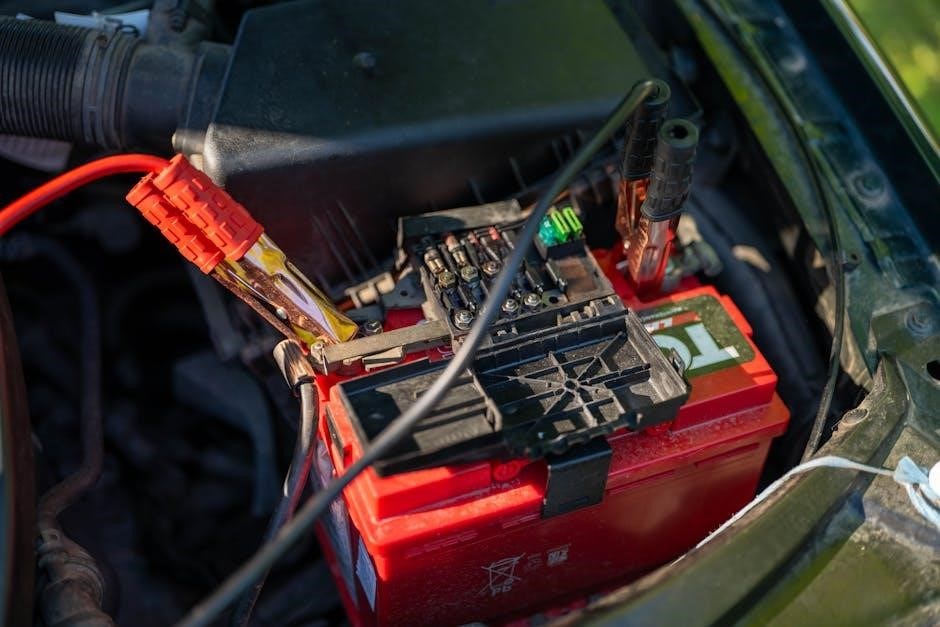
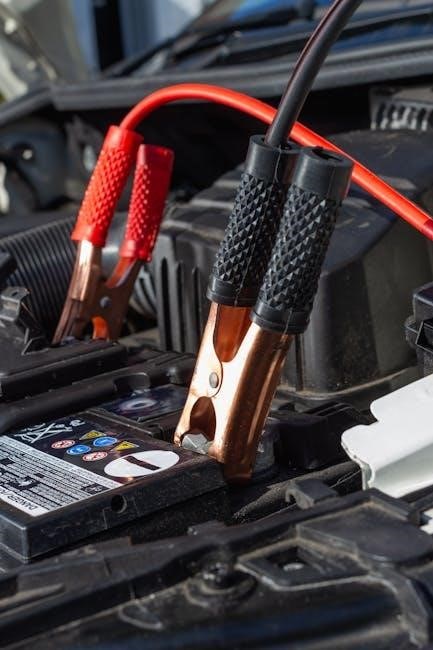
If your battery is discharged, jump-starting is possible, but follow the procedure outlined in the owner’s manual precisely․ Incorrect jump-starting can damage the vehicle’s electrical system․ Use jumper cables of appropriate gauge and connect them in the correct order – positive to positive, negative to a grounded metal surface․

Avoid prolonged battery drain by turning off lights and accessories when the engine is off․ Consider a battery tender if the vehicle is stored for extended periods․

Features and Systems

On January 1st, 2026, at 06:35:45, explore the 2018 RAV4’s advanced systems, including audio, navigation, climate control, and Toyota Safety Sense features, alongside media support․

Audio System and Bluetooth Connectivity

The 2018 Toyota RAV4’s audio system is designed for an immersive listening experience․ It typically features AM/FM radio, a CD player (depending on trim level), auxiliary and USB inputs, and Bluetooth wireless technology․ Bluetooth allows for hands-free calling and audio streaming from compatible smartphones and devices․

To pair a device, access the Bluetooth settings through the touchscreen display․ The system will search for available devices; select yours when it appears and follow the on-screen prompts to enter a PIN if required․ Once paired, your device will automatically connect when within range․

Volume and track controls are conveniently located on the steering wheel․ The system also supports voice commands for certain functions, enhancing safety while driving․ Refer to the full owner’s manual for detailed instructions on utilizing all audio features and troubleshooting connectivity issues, as of January 1st, 2026, at 06:35:45․

Navigation System Operation

The 2018 RAV4’s optional navigation system provides turn-by-turn directions and points of interest․ Operation is primarily through the touchscreen display․ To input a destination, you can enter an address, select a point of interest, or choose a previously saved location․ The system utilizes map data, so periodic updates are recommended to ensure accuracy․

Voice guidance is available, providing audible directions without requiring you to take your eyes off the road․ Route options allow you to prioritize fastest time, shortest distance, or avoid tolls․ The system also displays traffic information, dynamically adjusting your route to bypass congestion․

Familiarize yourself with the map display settings, including zoom levels and orientation․ Refer to the owner’s manual for detailed instructions on utilizing all navigation features, including destination saving and route customization, as of January 1st, 2026, at 06:35:45․

Climate Control System

The 2018 RAV4 features a user-friendly climate control system designed for comfort in all conditions․ Manual and automatic modes are available, allowing you to precisely control temperature and airflow․ The system offers dual-zone control, enabling separate temperature settings for driver and passenger․ Utilize the fan speed adjustment to regulate airflow intensity․

Recirculation mode helps to quickly cool or heat the cabin and can improve air quality by filtering outside pollutants․ The defrost function efficiently clears windshield fog and ice․ Understanding the various vent selections – face, feet, and defrost – optimizes airflow for your needs․

Regularly check the cabin air filter for cleanliness, as a clogged filter reduces system efficiency․ Consult the owner’s manual for specific instructions on operation and maintenance, remembering January 1st, 2026, at 06:35:45․

Toyota Safety Sense (TSS) Features

The 2018 RAV4 incorporates Toyota Safety Sense (TSS), a suite of advanced safety technologies designed to assist the driver and enhance protection․ Pre-Collision System with Pedestrian Detection helps mitigate or avoid collisions․ Lane Departure Alert with Lane Keep Assist warns of unintentional lane drifts and provides corrective steering․ Automatic High Beams enhance visibility at night․

Dynamic Radar Cruise Control maintains a preset distance from the vehicle ahead․ Road Sign Assist detects and displays certain road signs, providing helpful information․ These systems are aids and do not replace safe driving practices․

Familiarize yourself with the operational limitations of TSS, as detailed in the owner’s manual․ Remember that January 1st, 2026, at 06:35:45, proper understanding is crucial for effective use and safety․

Troubleshooting and Emergency

Today, January 1st, 2026, at 06:35:45, this section details warning lights, emergency procedures—accidents or breakdowns—and towing information for your 2018 RAV4․

Common Warning Lights and Their Meanings

Understanding your 2018 Toyota RAV4’s warning lights is crucial for safe operation and preventative maintenance․ The “Check Engine” light indicates a potential engine issue, requiring prompt diagnosis․ A flashing “Check Engine” light signifies a severe problem needing immediate attention․ The “Oil Pressure” warning signals low oil levels or pressure, potentially causing engine damage – stop driving immediately․

The “Battery” light indicates a charging system malfunction; investigate the alternator and battery․ A “Brake System” warning suggests issues with the braking system, including low brake fluid or ABS problems․ The “ABS” light illuminates when the Anti-lock Braking System detects a fault․ The “Tire Pressure” light alerts you to low tire pressure, impacting handling and fuel economy․ Finally, the “Seatbelt” reminder ensures all occupants are properly restrained for safety․ Refer to your owner’s manual for a complete list and detailed explanations․

What to Do in an Emergency (Accident, Breakdown)

In the event of an accident, prioritize safety: check for injuries, move to a safe location if possible, and call emergency services (911)․ Exchange information with other drivers involved, including insurance details․ If your 2018 RAV4 experiences a breakdown, activate your hazard lights to alert other motorists․

Pull over to a safe location, away from traffic․ If you can’t reach a safe spot, remain in the vehicle with your seatbelt fastened․ Contact roadside assistance for towing or repair services․ Avoid attempting complex repairs yourself unless you are qualified․ Be aware of your surroundings and exercise caution when exiting the vehicle․ Remember to have your vehicle identification number (VIN) and insurance information readily available when requesting assistance․ Always prioritize personal safety․

Towing Information and Procedures

When towing your 2018 Toyota RAV4, always use a properly equipped vehicle and towing hardware․ Consult a professional towing service for safe and compliant towing procedures․ Ensure the tow hitch is securely attached and rated for the RAV4’s weight․ Utilize appropriate safety chains and wiring connections for lights and braking systems․

During towing, maintain a safe speed and distance from the vehicle being towed․ Avoid sudden braking or sharp turns․ Regularly inspect the towing connection points for any signs of wear or loosening․ If self-towing is necessary, familiarize yourself with the RAV4’s towing capacity and limitations outlined in this manual․ Improper towing can cause damage to your vehicle and create a safety hazard․

Technical Specifications

The 2018 RAV4’s ftyp mp42 structure, alongside engine details and dimensional capacities, are meticulously documented within this manual for comprehensive vehicle understanding․

Engine Specifications

Delving into the heart of the 2018 Toyota RAV4, the engine specifications are crucial for understanding its performance capabilities․ The standard engine is a 2․5-liter four-cylinder, producing 203 horsepower and 184 lb-ft of torque․ This engine is paired with an eight-speed automatic transmission, ensuring smooth and efficient power delivery․

For those seeking enhanced performance, the RAV4 also offers an optional 2․5-liter four-cylinder engine integrated within a hybrid system․ This configuration boosts combined output to 219 horsepower․ The hybrid powertrain utilizes a continuously variable transmission (CVT) for optimal fuel economy․ Detailed information regarding compression ratios, valve train configurations, and fuel injection systems are thoroughly outlined within this manual, providing a complete technical overview for owners and service professionals alike․ Understanding these specifications is key to proper maintenance and maximizing the longevity of your RAV4’s engine․

Dimensions and Capacities

Understanding the physical attributes of your 2018 Toyota RAV4 is essential for practical use and planning․ The RAV4 boasts an overall length of 180․9 inches, a width of 73․0 inches, and a height of 67․1 inches․ Its wheelbase measures 105․9 inches, contributing to a stable ride․

Interior space is generous, offering 37․6 inches of front legroom and 37․2 inches of rear legroom․ Cargo capacity is a standout feature, providing 37․6 cubic feet behind the rear seats and expanding to 73․4 cubic feet with the rear seats folded down․ The fuel tank capacity is 15․8 gallons․ Maximum towing capacity reaches 1,500 pounds with the proper equipment․ These dimensions and capacities are vital for transporting passengers and cargo efficiently, and are detailed further within this manual for precise planning and utilization․