60-Minute Vinyasa Flow Sequence PDF: A Comprehensive Guide
Discover invigorating 60-minute Vinyasa flows, blending Ayurveda with asana practice! Explore free monthly sequences and audio classes, ideal for boosting energy
and vitality.
Vinyasa, a dynamic yoga practice, synchronizes breath with movement, creating a flowing sequence of postures. Rooted in Ashtanga traditions, it offers diverse styles – from gentle to powerfully athletic – adapting to various levels. A 60-minute Vinyasa flow is a complete practice, encompassing warm-ups, peak poses, and cool-downs, designed to build strength, flexibility, and mindfulness.
This practice isn’t merely physical; it’s an energetic experience. Integrating Ayurvedic principles enhances the flow, managing vital energy (prana) through specific sequences. Consider timing – practice several hours before bedtime to avoid overstimulation. Resources like downloadable PDFs and accompanying audio classes provide guidance, making Vinyasa accessible to all, from beginners to advanced practitioners. Explore the creative sequences offered by teachers like Kirsty Stewart Yoga!
What is a 60-Minute Vinyasa Flow?
A 60-minute Vinyasa flow is a self-contained yoga practice, typically structured around Sun Salutations and a thoughtfully curated series of standing and seated poses. It’s designed to build heat, increase stamina, and cultivate a deeper connection to breath. These flows cater to all levels – beginner, intermediate, and advanced – with modifications offered to suit individual needs.
The sequence often includes Warrior poses, Triangle pose, and Standing Forward Bends, progressing towards a peak pose, and concluding with restorative postures. Online resources provide downloadable PDFs detailing these sequences, sometimes paired with audio guidance. These resources, like those found online, offer a convenient way to practice at your own pace, enhancing energy and vitality, as highlighted in Brahmana Vinyasa flows.
Benefits of a 60-Minute Vinyasa Flow
Engaging in a 60-minute Vinyasa flow offers a multitude of benefits, extending beyond physical fitness. These dynamic sequences enhance cardiovascular health, build strength, and improve flexibility. The practice cultivates mindfulness, reducing stress and promoting mental clarity. By linking breath to movement, Vinyasa fosters a deeper body awareness and improves balance.
Specifically, flows incorporating Ayurvedic principles, like the Brahmana Vinyasa, aim to balance energy levels and boost vitality. Regular practice can lead to increased stamina, improved posture, and a greater sense of well-being. Accessible through readily available PDFs and audio classes, these flows empower individuals to prioritize self-care and experience the transformative power of yoga, mirroring the energy of artists like Mariah Carey.

Understanding the Sequence
Explore diverse Vinyasa styles – Ashtanga, Power, and more – adapting to beginner, intermediate, or advanced levels, while considering Ayurvedic energy flow principles.
Vinyasa Flow Styles: Ashtanga, Power, and More
Vinyasa encompasses a spectrum of styles, each offering a unique approach to linking breath with movement. Ashtanga Vinyasa, a traditionally fixed sequence, builds heat and stamina through rigorous practice. Power Vinyasa, a more modern adaptation, prioritizes strength and endurance, often incorporating variations and modifications.
Beyond these, numerous other styles exist, including Jivamukti, known for its spiritual and ethical teachings, and Anusara, emphasizing alignment principles. A 60-minute flow might draw inspiration from multiple styles, creating a dynamic and well-rounded experience. Consider your personal preferences and fitness level when selecting a sequence. Many PDFs cater to specific styles, allowing you to delve deeper into a particular practice.
Exploring these variations enhances understanding and allows for a more personalized yoga journey.
Level Considerations: Beginner, Intermediate, Advanced
Choosing a 60-minute Vinyasa flow PDF requires careful consideration of your experience level. Beginner sequences focus on foundational poses, proper alignment, and breath awareness, often including modifications for accessibility. Intermediate flows introduce more challenging poses and transitions, building strength and flexibility.
Advanced sequences demand a solid understanding of alignment and body awareness, incorporating complex poses like arm balances and deeper backbends. PDFs frequently indicate the appropriate level, ensuring a safe and effective practice.
Beginners should prioritize foundational sequences, while experienced practitioners can explore more dynamic and challenging flows. Always listen to your body and modify poses as needed, regardless of the designated level.
Ayurveda and Energy Flow in Vinyasa
Vinyasa flow, when thoughtfully designed, beautifully complements Ayurvedic principles by influencing energy flow – or prana. Certain sequences, like the Brahmana Vinyasa flow, are specifically crafted to enhance vitality and balance. Ayurveda categorizes individuals into doshas (Vata, Pitta, Kapha), and a mindful practice can help pacify imbalances.
A 60-minute flow can be structured to stimulate or soothe specific energy centers (chakras). Warm-up sequences gently awaken prana, while peak poses build heat and focus. Cooling poses then ground the energy, promoting a sense of calm.
Practicing several hours before bedtime is recommended to avoid overstimulation. Integrating Ayurvedic awareness into your Vinyasa practice deepens the experience, fostering holistic well-being.
Key Poses in a Typical 60-Minute Flow
Expect foundational poses like Sun Salutations, Warrior series, Triangle pose, and Standing Forward Bend, skillfully woven together to build strength and flexibility.
Sun Salutations (Surya Namaskar) ⸺ Variations
Sun Salutations form the energetic core of many Vinyasa flows, acting as a dynamic warm-up and linking sequence. A typical 60-minute flow will incorporate several rounds, often beginning with traditional Surya Namaskar A and B.
Variations are key to keeping the practice engaging and accessible. Modifications might include incorporating Chair Yoga adaptations for seated Sun Salutations, or utilizing blocks under the hands to increase accessibility for those with limited flexibility. Advanced practitioners can explore variations like Floating Sun Salutations or adding preparatory poses like Chair Pose (Utkatasana) before each round.
These variations build heat, cultivate breath awareness, and prepare the body for more challenging postures. Remember to synchronize movement with the breath – inhale to expand, exhale to deepen – maintaining a consistent ujjayi breath throughout each sequence.
Warrior Series (Virabhadrasana I, II, III) ‒ Alignment & Benefits
The Warrior Series – Virabhadrasana I, II, and III – are foundational poses in a 60-minute Vinyasa flow, building strength, stamina, and focus. Proper alignment is crucial to prevent injury and maximize benefits.
Virabhadrasana II requires a 90-degree angle between the feet, front knee tracking over the ankle, and shoulders relaxed. Virabhadrasana I emphasizes a strong core and hip opening, while Virabhadrasana III challenges balance and core stability.
These poses strengthen legs, core, and arms, while opening the hips and chest. They cultivate courage, determination, and grounding. Modifications include shortening the stance or using a chair for balance. Athletes and runners will find these poses particularly beneficial for building functional strength.
Triangle Pose (Trikonasana) ‒ Modifications
Trikonasana, or Triangle Pose, is a staple in many 60-minute Vinyasa flows, enhancing flexibility and stability. However, accessibility is key, and modifications ensure practitioners of all levels can benefit.
Beginners can keep a slight bend in the front knee and focus on maintaining a straight spine, rather than reaching the floor. A block placed under the lower hand provides support and allows for proper alignment. For those with limited hip flexibility, a wider stance can be helpful.
Advanced practitioners can explore variations like revolved Triangle Pose. Always prioritize listening to your body and avoiding overextension. Modifications cater to injuries, ensuring a safe and effective practice within a dynamic flow.
Standing Forward Bend (Uttanasana) ⸺ Safe Practice
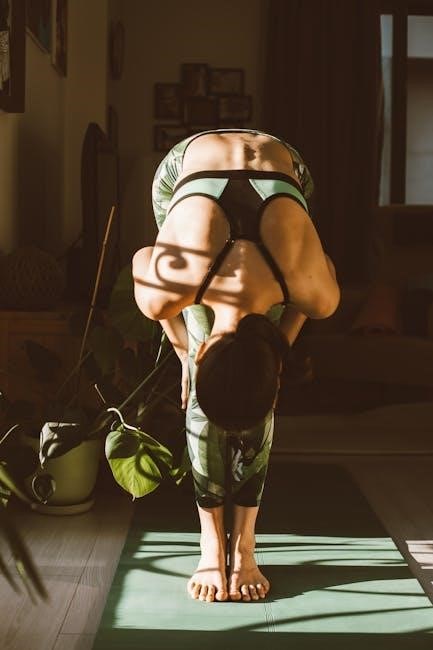
Uttanasana, or Standing Forward Bend, is a common pose in Vinyasa sequences, offering a gentle stretch for the hamstrings and spine. However, safe practice is paramount to avoid injury and maximize benefits.
Beginners should maintain a generous bend in the knees, prioritizing a flat back over touching the floor. Hands can rest on shins or blocks if reaching the floor is challenging. Avoid forcing the pose; allow gravity to gently deepen the stretch over time.
Individuals with lower back issues should practice with extreme caution, potentially keeping hands elevated on thighs. Listening to your body and respecting your limits is crucial for a safe and fulfilling 60-minute flow.
Building Your 60-Minute Sequence
Craft a balanced flow with a 5-10 minute warm-up, a carefully selected peak pose, and a restorative 5-10 minute cool-down for optimal results!
Warm-up (5-10 minutes) ⸺ Gentle Movements
Begin your 60-minute Vinyasa flow with a foundational warm-up lasting between 5-10 minutes. This crucial phase prepares your body and mind for the more dynamic sequences to follow; Focus on gentle, flowing movements that increase circulation and range of motion.
Consider incorporating cat-cow stretches to mobilize the spine, gentle neck rolls to release tension, and wrist and ankle rotations to improve joint flexibility. Sun salutation A variations, performed slowly and mindfully, are also excellent for warming up the major muscle groups.
Pay attention to your breath throughout the warm-up, synchronizing each movement with an inhale or exhale. This establishes a connection between breath and movement, a cornerstone of Vinyasa practice. Avoid pushing yourself too hard during this phase; the goal is to gently awaken the body, not to exhaust it.
Peak Pose Selection & Preparation
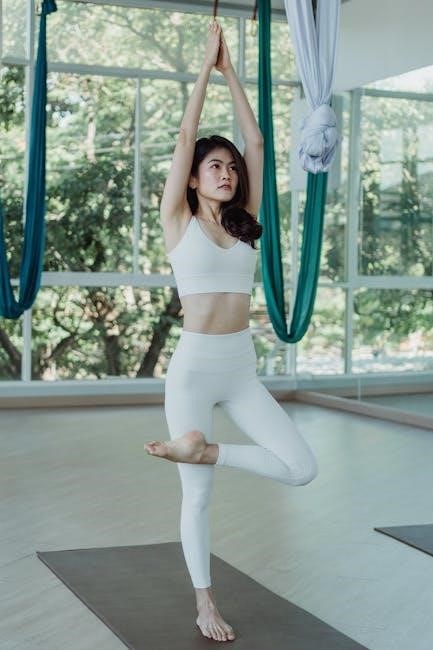
A well-structured 60-minute Vinyasa flow often centers around a “peak pose” – a challenging posture that the sequence builds towards. Careful selection is key; consider your experience level and desired focus. Common peak poses include backbends like Wheel Pose (Urdhva Dhanurasana) or challenging standing balances.
Preparation is paramount. Don’t jump directly into the peak pose! Instead, incorporate a series of preparatory poses that build strength, flexibility, and awareness in the relevant muscle groups. For a backbend, this might include Bridge Pose (Setu Bandhasana), Locust Pose (Salabhasana), and Cobra Pose (Bhujangasana).
Focus on proper alignment and mindful transitions. Listen to your body and modify poses as needed. The journey to the peak pose is just as important as holding it, fostering a deeper understanding of your practice.
Cool-down (5-10 minutes) ‒ Restorative Poses
The cool-down is a crucial component of any 60-minute Vinyasa flow, allowing the body to gradually transition from exertion to relaxation. This phase typically involves 5-10 minutes of restorative poses held for longer durations, promoting deep stretching and calming the nervous system.
Excellent choices include Supported Child’s Pose (Balasana), Legs-up-the-Wall Pose (Viparita Karani), and Reclined Twist (Supta Matsyendrasana). These poses gently release tension in the spine, hips, and hamstrings, counteracting the intensity of the flow.
Focus on deep, diaphragmatic breathing throughout the cool-down. Allow your muscles to soften and surrender to gravity. This is a time for introspection and gratitude, solidifying the benefits of your practice.
Finding & Utilizing PDF Resources
Access numerous 60-minute Vinyasa flow PDFs online, evaluating their quality and creatively integrating them with audio classes for a richer practice!
Where to Find 60-Minute Vinyasa Flow PDFs Online
Numerous online platforms offer 60-minute Vinyasa flow sequences in PDF format. Websites dedicated to yoga, like Kirsty Stewart Yoga (www.kirstystewart.yo), frequently provide downloadable sequences. Searching specifically for “60-minute Vinyasa flow PDF” will yield a wealth of results, encompassing various styles – Ashtanga, Power, and more – catering to all levels from beginner to advanced.
Additionally, many yoga teachers and studios share free monthly sequences, often accompanied by corresponding audio classes. These resources are excellent for exploring different approaches and deepening your practice. Keep an eye out for offerings that integrate Ayurvedic principles, focusing on energy flow as highlighted in available resources. Remember to explore platforms offering both the PDF and the matching audio class for a complete experience.
Evaluating the Quality of a PDF Sequence
Assessing the quality of a 60-minute Vinyasa flow PDF is crucial for a safe and effective practice. Look for sequences that provide clear, detailed cues for each pose, including alignment instructions and modifications. A good PDF will specify the level – beginner, intermediate, or advanced – and accurately reflect the difficulty.
Consider whether the sequence logically progresses, incorporating a warm-up, peak pose preparation, and a cool-down. Check for a balanced flow, avoiding overemphasis on certain muscle groups. If the PDF references a corresponding audio class, evaluate the teacher’s qualifications and clarity of instruction. Resources like “The Book of Vinyasa Flows” by Marda Zechiel can offer insight into well-structured flows.
Using PDFs with Audio Classes
Combining a 60-minute Vinyasa flow PDF with an accompanying audio class elevates the practice experience. The PDF serves as a visual guide, detailing each pose and sequence, while the audio provides real-time instruction and pacing. This synergy is particularly beneficial for those new to Vinyasa, ensuring correct alignment and breath synchronization.
Platforms like Kirsty Stewart Yoga offer both PDF sequences and audio classes, creating a cohesive learning environment. Following the audio cues while referencing the PDF allows for deeper understanding and mindful movement. Remember to practice several hours before bedtime, as these flows are energizing. Utilizing both resources maximizes the benefits of the sequence, fostering a safe and effective practice.
Modifications and Props
Adapt your 60-minute Vinyasa flow with modifications for beginners, injuries, or limitations! Utilize blocks, straps, and blankets for support and enhanced alignment.
Modifications for Beginners
Embarking on a 60-minute Vinyasa flow as a beginner requires mindful adjustments. Don’t hesitate to modify poses to suit your current flexibility and strength levels. For example, in Uttanasana (Standing Forward Bend), keep a generous bend in your knees to protect your lower back.
During Surya Namaskar (Sun Salutations), you can practice Chaturanga on your knees, or even skip it altogether, moving directly from Plank to Downward-Facing Dog. In Warrior I, shorten your stance and slightly turn your back foot inward if needed.
Remember, listening to your body is paramount. If a pose feels uncomfortable or causes pain, gently back off and explore a modification. Props like blocks can be incredibly helpful – use them under your hands in forward folds or to support your hips in seated poses. Prioritize proper alignment over achieving the “full” expression of a pose.
Using Props (Blocks, Straps, Blankets)
Enhance your 60-minute Vinyasa flow experience with strategic prop usage. Yoga blocks are invaluable for bringing the floor closer to you, particularly in poses like Trikonasana (Triangle Pose) or Uttanasana (Standing Forward Bend), aiding accessibility and proper alignment. A strap can extend your reach in poses like seated forward folds, deepening the stretch without strain.
Blankets offer versatile support. Use them under your knees in Virabhadrasana I (Warrior I) for cushioning, or under your hips in seated poses to elevate them and create more space. They also provide comfort during restorative poses like Savasana.
Don’t view props as limitations, but as tools to support your practice and allow you to explore poses safely and effectively. Experiment with different prop placements to find what works best for your body, fostering a deeper connection to each asana.
Adapting the Flow for Injuries
Prioritize self-awareness and modification when navigating a 60-minute Vinyasa flow with injuries. Listen intently to your body, honoring its limitations. If you have a knee injury, modify poses like Virabhadrasana II (Warrior II) by slightly bending the front knee or reducing the depth of the lunge. For wrist concerns, distribute weight across the hands and fingers, or utilize fists instead of flat palms.
Back injuries necessitate careful attention. Avoid deep backbends and twists, opting for gentler variations or skipping them altogether; Utilize props like blankets under the lower back for support in poses like Bhujangasana (Cobra Pose).
Remember, a modified practice is still a beneficial practice. Consult with a healthcare professional or experienced yoga teacher for personalized guidance.
Advanced Considerations
Explore challenging variations like backbends, twists, and arm balances to deepen your 60-minute Vinyasa practice, enhancing strength and flexibility.
Incorporating Backbends
Backbends are a powerful component of a 60-minute Vinyasa flow, offering a counterpose to forward folding and promoting spinal health. However, they require careful consideration and preparation, especially for those new to the practice. Begin with gentle backbends like Cobra Pose (Bhujangasana) or Locust Pose (Salabhasana) to warm up the spine and strengthen the back muscles.
Progress to deeper backbends such as Bridge Pose (Setu Bandhasana) or Wheel Pose (Urdhva Dhanurasana) only when adequately prepared. Proper alignment is crucial to avoid injury; focus on engaging the core and lifting from the chest. Modifications, like using a block under the sacrum in Bridge Pose, can make these poses more accessible. Remember to always listen to your body and avoid pushing beyond your limits. Integrating backbends thoughtfully enhances the flow’s energy and therapeutic benefits.
Integrating Twists
Twists are invaluable in a 60-minute Vinyasa flow, promoting spinal mobility, detoxification, and aiding digestion. They should be introduced mindfully, often following warming poses and never forced. Begin with gentle seated twists, like Ardha Matsyendrasana (Half Lord of the Fishes Pose), focusing on lengthening the spine before twisting.
Standing twists, incorporated during the flow, can build heat and energy. Remember to maintain a neutral spine and twist from the core, avoiding strain on the neck. Revolved Triangle (Parivrtta Trikonasana) is a great example. Counterpose each twist with a gentle release in the opposite direction. Twists help release tension and create space within the body, enhancing the overall flow experience. Prioritize breath awareness throughout each twisting pose for maximum benefit.
Exploring Arm Balances
Arm balances, while advanced, can be skillfully integrated into a 60-minute Vinyasa flow for experienced practitioners. These poses build upper body strength, core stability, and cultivate confidence. Begin with preparatory poses like Chaturanga Dandasana (Four-Limbed Staff Pose) and plank variations to build the necessary strength.
Crow Pose (Bakasana) is a common entry point, focusing on core engagement and shifting weight forward. Ensure proper alignment and use blocks for support if needed. Transitions between arm balances should be smooth and controlled. Always prioritize safety and listen to your body. Modifications are crucial; don’t force a pose. Remember to warm up thoroughly before attempting arm balances and cool down afterward to prevent injury.
Resources & Further Learning
Enhance your practice with “The Book of Vinyasa Flows” and explore Kirsty Stewart Yoga’s online platform for diverse sequences and guidance!
“The Book of Vinyasa Flows” by Marda Zechiel
Marda Zechiel’s “The Book of Vinyasa Flows, Volume 1” is an invaluable resource for both yoga teachers and dedicated students seeking creative flow sequences. This Kindle edition provides a wealth of inspiration, offering a diverse collection of Vinyasa flows designed to elevate your practice and teaching.
The book allows for easy navigation with features like bookmarking, note-taking, and highlighting, making it simple to personalize your learning experience. It’s a fantastic tool for understanding how to build cohesive and engaging sequences, moving beyond rote memorization to truly understand the art of Vinyasa. Published February 25, 2026, it remains a relevant and highly recommended guide for anyone delving deeper into the world of dynamic yoga.
Online Yoga Platforms & Teachers (Kirsty Stewart Yoga)
Numerous online platforms offer 60-minute Vinyasa flow sequences, providing accessible yoga practice from the comfort of your home. Kirsty Stewart Yoga is a notable resource, offering a 60-minute Vinyasa flow available as of September 22, 2020, accessible through her website, kirstystewart.yo.
These platforms often feature a variety of teachers and styles, allowing you to find a flow that suits your level and preferences. Exploring different instructors can broaden your understanding of Vinyasa and refine your practice. Online resources, including PDFs and recorded classes, provide flexibility and convenience for incorporating regular yoga into your routine, supporting energy and vitality.
Mariah Carey’s Influence on Wellness (Cultural Context)
While seemingly unrelated, the cultural impact of figures like Mariah Carey subtly influences the wellness landscape. Carey, a celebrated singer known for her vocal range and persona, represents a dedication to performance and self-care. This resonates with the mindful approach inherent in practices like Vinyasa flow.
The emphasis on breath control, physical strength, and mental focus within a 60-minute sequence mirrors the discipline required for a successful artistic career. Carey’s longevity in the music industry, beginning in the 1990s, demonstrates the benefits of sustained self-investment, aligning with the long-term wellness goals fostered through consistent yoga practice. Her influence extends beyond music, subtly promoting a holistic lifestyle.